
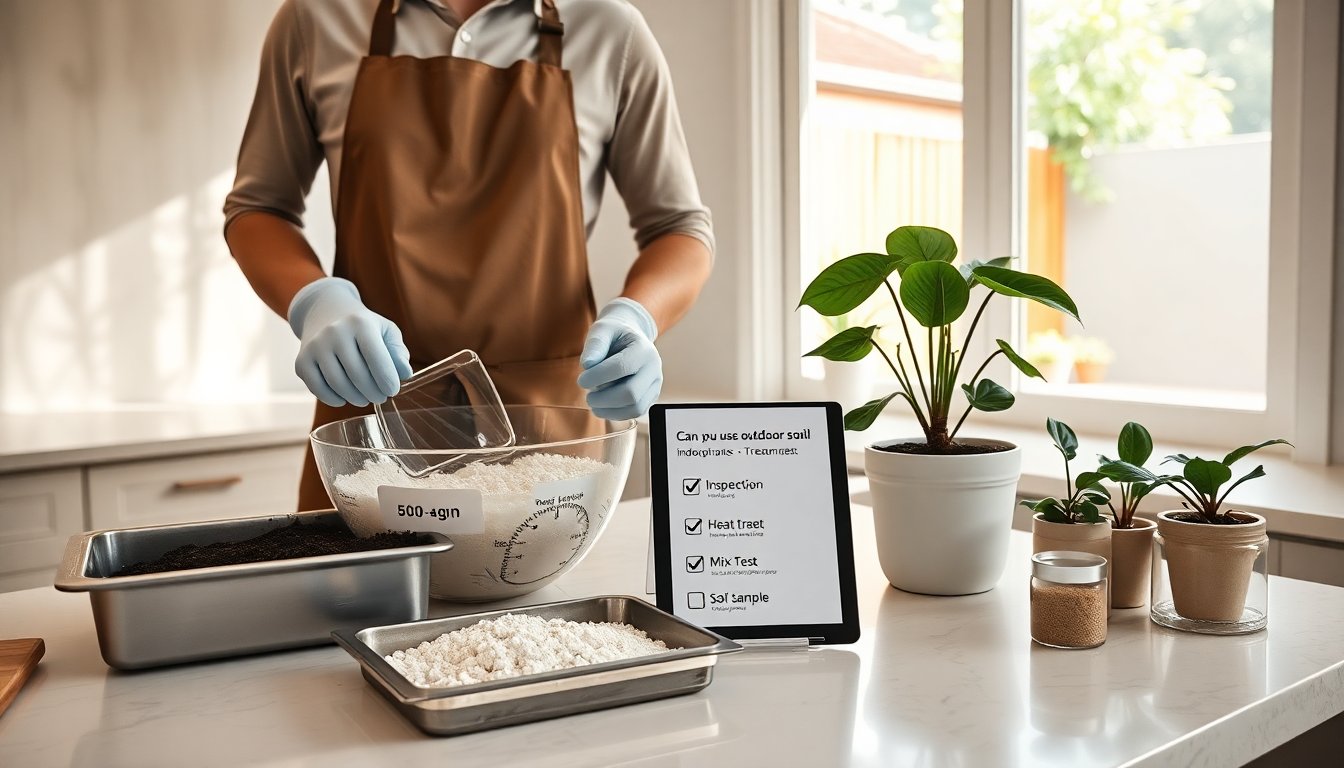

Can you use outdoor soil for indoor plants is a common question for gardeners. The phrase asks if dirt from outside will work inside the home. Many people grab garden soil and pot a houseplant. This guide states risks, safe cases, and steps to treat outdoor soil. It helps readers decide and act with clear, practical steps.
Key Takeaways
- Using outdoor soil for indoor plants poses risks due to pests, fungi, bacteria, weed seeds, and inconsistent nutrients common in garden soil.
- Outdoor soil can be used safely indoors if it is clean, pesticide-free, and from untreated areas, especially for hardy plants like rubber trees and pothos.
- Treat outdoor soil by removing debris, sun drying, heat treating at 180°F for 30 minutes, or steam pasteurizing to reduce pathogens and pests.
- Mix treated outdoor soil 50/50 with sterile potting mix and perlite to improve drainage, aeration, and nutrient balance for indoor plants.
- Monitor indoor plants closely after repotting with outdoor soil for at least four weeks to catch and address any pest or disease issues early.
- For the lowest risk and best results, commercial potting mixes are preferable due to their consistent sterility, nutrients, and drainage properties.
Risks And Drawbacks Of Using Outdoor Soil Indoors
Can you use outdoor soil for indoor plants without problems? Many people assume yes. The risk list says otherwise. Outdoor soil often contains pests. It carries insects, eggs, and microscopic mites. It also carries fungal spores. Those spores can cause root rot or leaf disease on indoor plants. Outdoor soil often contains weed seeds. Those seeds sprout in pots and compete with houseplants for water and nutrients.
Outdoor soil can host harmful bacteria. Those bacteria can harm people with weak immune systems. The soil can also contain chemical residues. Lawn treatments, pesticides, and fertilizers may remain in the dirt. Those chemicals can damage sensitive houseplants. Outdoor soil often has poor drainage for pots. Garden loam can compact in containers and restrict oxygen to roots. That compaction leads to slow growth and root decay.
Finally, outdoor soil has inconsistent nutrient levels. Garden soil varies by location. A pot needs a balanced medium with steady nutrients. Using outdoor soil can create nutrient imbalances and pH swings. For those reasons, many experts advise against placing untreated outdoor soil directly in indoor pots.
When Outdoor Soil Can Be Used Safely For Indoor Plants
Can you use outdoor soil for indoor plants in some cases? Yes, under controlled conditions. If the outdoor soil is clean, low in pests, and free of chemicals, it can work. A homeowner can test the soil first. They should inspect for insects, roots, and weed seeds. They should smell the soil. A sour or rotten odor indicates pathogens.
Use outdoor soil safely when the soil comes from an organic, untreated area. Soil from a vegetable garden that never saw pesticides tends to be safer. Use outdoor soil for large, durable houseplants that tolerate variable conditions. Plants like rubber trees and pothos accept heavier soils.
Mix outdoor soil with sterile potting mix to reduce risks. A 50/50 blend gives structure and reduces pest load per volume. Use outdoor soil as a top dressing instead of full potting mix when the plant is established. That approach lowers pest introduction and provides some natural microbes. When a grower heats or treats the soil first, the soil becomes safer. The next section lists treatment steps that reduce the danger of pests, pathogens, and weed seeds.
How To Prepare And Treat Outdoor Soil For Indoor Use
Can you use outdoor soil for indoor plants after treatment? Yes, with clear steps. First, remove debris. The gardener should pick out roots, rocks, and old plant parts. They should break large clumps into small pieces. Second, dry the soil in the sun. Lay the soil on a tarp for several hours on a hot day. Sun drying reduces surface pests and some fungi.
Third, heat-treat the soil. The gardener can bake soil in an oven-safe pan at 180°F (82°C) for 30 minutes. They should stir the soil midway and watch the temperature. This step kills many pathogens and insect eggs. They must avoid higher temperatures that release toxic compounds. Fourth, pasteurize with steam. Place the soil in a steam sterilizer or use a pressure cooker with a small amount of water. Steam for 30 minutes to reduce microbes while preserving some beneficial organisms.
Fifth, test for chemicals. If the soil came from a treated lawn or near a road, avoid indoor use. The gardener can send a sample to a lab or skip the soil entirely. Sixth, mix the treated soil with sterile potting mix and perlite. This mix improves drainage and aeration. Use a 1:1 ratio for most houseplants. Seventh, monitor plants after repotting. The owner should watch for pests or disease for four weeks and remove affected leaves promptly.
Following these steps reduces but does not remove all risk. If the gardener wants a lower-risk route, they should buy commercial potting mix. Commercial mixes give predictable drainage, nutrients, and sterility. Still, treated outdoor soil can work for many indoor plants when the gardener follows these steps and watches the plants closely.


