
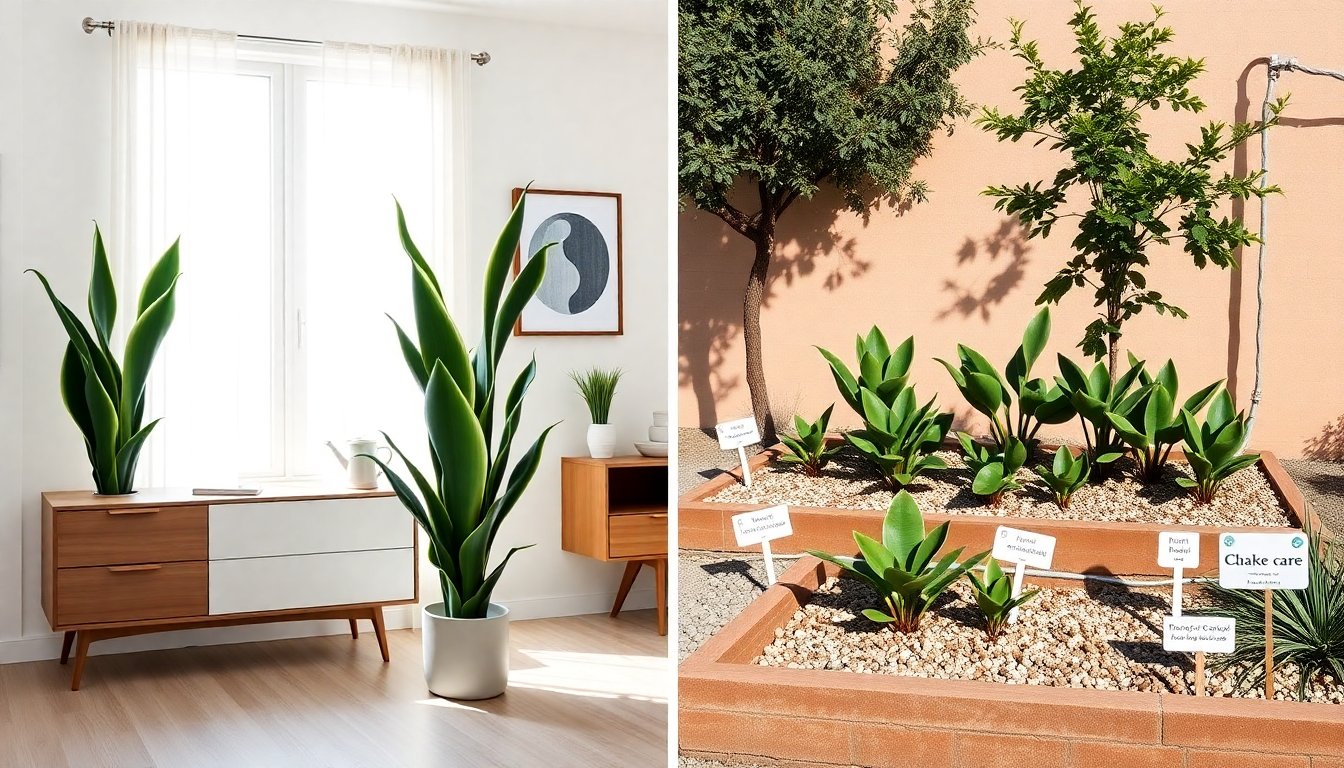

are snake plants indoor or outdoor plants is a common question for new plant owners. The phrase asks whether snake plants suit indoor rooms or outdoor gardens. This article gives clear facts. It shows how their native habits affect placement. It lists care steps for both settings. It helps readers choose the best spot for their plant.
Key Takeaways
- Snake plants are versatile and can be grown both indoors and outdoors depending on your local climate and conditions.
- Indoors, snake plants thrive in bright indirect light but tolerate low light, making them ideal for rooms with limited sunlight and offering air-cleaning benefits.
- Outdoors, snake plants flourish in USDA zones 9-11 with well-draining soil and a balance of sun and shade according to leaf type.
- Avoid overwatering snake plants in any setting; allow soil to dry between waterings to prevent root rot, and use pots with drainage when grown indoors.
- Protect outdoor snake plants from frost by covering or moving them indoors during cold spells, as temperatures below 50°F (10°C) can harm them.
- Choosing the right location and care routine for snake plants ensures healthy growth, low maintenance, and longevity, whether inside your home or in your garden.
Natural Habitat, Growth Habits, And What That Means For Placement
Snake plants evolved in dry tropical regions of West Africa and parts of Asia. The plant stores water in thick leaves. The plant tolerates both shade and bright light. The trait makes people ask, are snake plants indoor or outdoor plants? The answer depends on local climate and microclimate.
Sansevieria grows in rocky soils and near tree bases in the wild. The plant grows upright or in clumps. The plant spreads by rhizomes and by pups. The growth habit means the plant can colonize open ground outdoors. The same habit makes it fit for pots indoors.
Leaf shape varies by species. Some forms have long narrow leaves. Others show broad, mottled leaves. The leaf traits affect light needs and heat tolerance. Narrow-leaf types handle sun better. Broad-leaf types suffer in full sun.
The plant tolerates low humidity and low water. The plant resists pests that plague many houseplants. The plant tolerates temperature swings within reason. The plant suffers below about 50°F (10°C). This fact guides placement. In warm regions the plant can live outdoors year round. In cool regions the plant belongs inside or moves indoors in winter.
People choose indoor spots when they want clean air benefits or room decor. People place snake plants outdoors to add structure to landscape and to fill dry corners. Both choices work when the owner matches light, soil, and temperature to the plants needs.
Growing Snake Plants Indoors: Light, Watering, Benefits, And Common Mistakes
Indoor settings often answer the question are snake plants indoor or outdoor plants in favor of indoors. The plant adapts to low light. The plant prefers bright indirect light but survives in low light. Place the plant near an east or north window for steady light. Avoid direct afternoon sun on broad-leaf varieties.
Water the plant only when the top 1-2 inches of soil feel dry. Overwatering causes root rot. Use a pot with drainage. Use a free-draining potting mix with perlite or sand. Water less in winter. The plant stores water, so err on the side of dry.
Indoor benefits include air cleaning, low maintenance, and architectural form. The plant absorbs volatile compounds and adds vertical interest to rooms. The plant suits offices, bedrooms, and low-light bathrooms.
Common mistakes occur when owners water too much or keep the plant in cold drafts. People also use heavy soils that stay wet. People place the plant in tiny pots that limit root space. Repot the plant every 2-4 years into a slightly larger pot.
Fertilize lightly in spring and summer. Use a balanced houseplant fertilizer at half strength once a month. Monitor for mealybugs and spider mites. Isolate a new plant for a few weeks to spot pests early.
Indoor owners who ask are snake plants indoor or outdoor plants should measure indoor temperature. Keep the plant above 55°F (13°C). Rotate the pot monthly for even growth. Wipe leaves with a damp cloth to remove dust. Clean leaves improve photosynthesis and room appearance.
Growing Snake Plants Outdoors: Climate, Site Selection, Soil, And Winter Care
Outdoor gardeners ask are snake plants indoor or outdoor plants when they plan landscapes. The plant thrives outdoors in USDA zones 9-11. In these zones the plant faces mild winters and warm summers. The plant tolerates full sun to partial shade depending on cultivar.
Choose a site with well-draining soil. Amend heavy clay with grit or coarse sand. Raise beds or use mounds to improve drainage. Plant with 1-2 feet spacing for clumping varieties. Give narrow-leaf types more sun and broad-leaf types filtered shade.
Mulch lightly to conserve moisture and to moderate soil temperature. Do not pile mulch against the crown. The crown must stay dry to prevent rot. Water new outdoor plants until they establish. After establishment, the plant needs little supplemental water.
Protect outdoor plants from frost. In areas with short cold snaps, cover plants with cloth at night. For prolonged freezes, move potted plants indoors. The plant can survive brief freezes if dry and planted in rocky soil, but repeated freezes will kill it.
Watch for sunscald on hot afternoons. Provide afternoon shade for broad-leaf varieties. Monitor soil moisture after heavy rains. Improve drainage if water pools.
Outdoor pests include slugs and snails in moist climates and root rot in poorly drained sites. Use organic slug controls and adjust irrigation. For large outdoor specimens, divide clumps every 3-5 years to renew growth and to control spread.
Gardeners who decide whether are snake plants indoor or outdoor plants should match species, local climate, and site conditions. The plant rewards correct placement with steady growth, low water needs, and long life.


